The Cancun International Airport (CUN) is not merely a transportation infrastructure; it is the primary gateway to Mayan culture, the Mexican Caribbean beaches, and one of the most powerful economic engines in Latin America. Located on the northeast coast of the Yucatan Peninsula, this airfield has evolved from a modest landing strip in the middle of the jungle to become the second busiest airport in Mexico and the absolute leader in international arrivals for the country.
To understand the magnitude of the Cancun International Airport, it is necessary to analyze its strategic role in global connectivity. Its geographic location positions it as a natural connection point between North America, Europe, and the rest of Latin America, facilitating not only leisure tourism but also business and convention travel in the Riviera Maya.
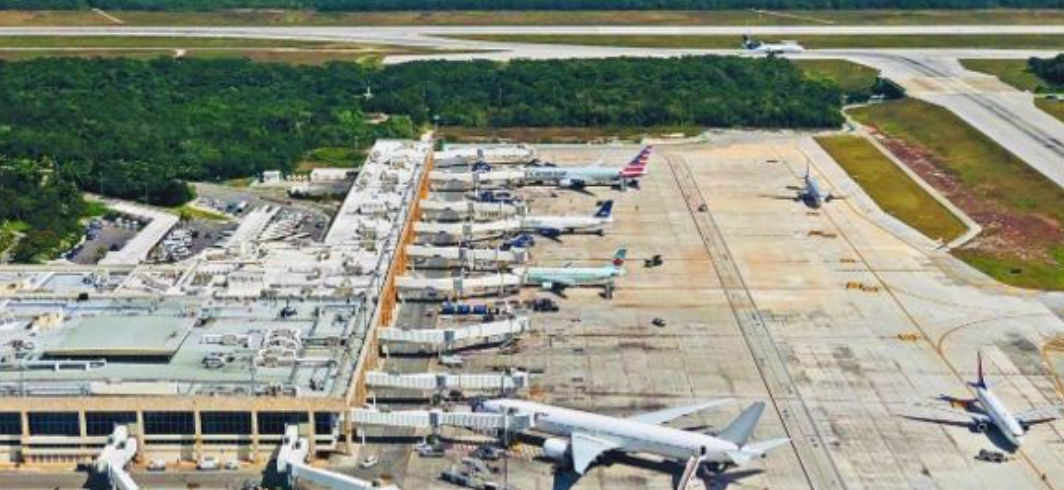
The airport complex is currently divided into four commercial terminals and a general aviation terminal (FBO). Each has a specific role within the destination's logistics.
Terminal 1: Charter Flights and Specific Operations
Although it is the oldest, it has been remodeled to serve primarily charter flights and some regional operations. It is less frequented by the average passenger, but it maintains vital historical and logistical relevance for organized groups and specific private flights.
Terminal 2: The Heart of Domestic Flights
This terminal is the operations hub for most Mexican domestic airlines and some international flights to Central America. It features two departure lounges: Lounge A and Lounge B. It is famous for its wide commercial and gastronomic offerings, connecting Cancun with cities such as Mexico City, Monterrey, and Guadalajara on a constant basis.
Terminal 3: Gateway to North America and Europe
Dedicated almost exclusively to international traffic, this is where giants like American Airlines, Delta, and United operate. Its design allows for a rapid flow of passengers and features extensive Duty-Free zones. It is here that the cosmopolitan character of the region is most intensely felt, as a diversity of languages can be heard in every corridor.
Terminal 4: Innovation and Sustainability
This is the crown jewel of the Cancun International Airport. With modern architecture, this terminal manages both domestic and international flights (especially for airlines like Aeroméxico and Air France-KLM). It is connected to the other terminals by a free internal shuttle system, facilitating connections for travelers.
Strategic Location and Surrounding Geography
The airport is located approximately 16 kilometers from downtown Cancun and about 20 kilometers from the Hotel Zone. Its location is strategic not only due to its proximity to the city but also because of its direct access to Federal Highway 307.
Connection with the Riviera Maya
The tourist corridor known as the Riviera Maya begins south of the airport. The Cancun International Airport serves as the disembarkation point for iconic destinations such as:
- Puerto Morelos: Just 20 minutes away, a town with bohemian charm and a national marine park.
- Playa del Carmen: About 45–50 minutes away, the vibrant heart of the Riviera.
- Tulum: Approximately one and a half hours away, famous for its ruins facing the sea and its eco-chic lifestyle.
The Surrounding Ecosystem
The airport is surrounded by mangroves and tropical deciduous forest. Because of this, the airport administration carries out strict wildlife control and environmental preservation programs. It is not uncommon for travelers, upon takeoff or landing, to observe the vastness of the Nichupté lagoon system to the north and the thick jungle to the south and west.
Services and Facilities for the Traveler
An airport of this category offers services that go beyond the basics, seeking to improve the user experience in an environment that can be stressful due to the volume of people.
Gastronomy and Shopping
The commercial offering is one of the most robust in the country. Travelers can find everything from high-quality Mexican handicrafts to international luxury brands. In the gastronomic field, the variety includes typical Yucatecan food, international coffee chains, and signature restaurants. The "Duty-Free" concept in Cancun is particularly strong, offering competitive prices on perfumes, liquors, and tobacco.
Financial and Health Services
The airport has multiple currency exchange offices operating 24 hours a day, ATMs from Mexico's major banks, and medical assistance services. In recent years, tourist information modules and digital kiosks have been implemented to streamline immigration processes.
Transportation and Internal Mobility
To move between terminals, there is a free shuttle service that operates at frequent intervals. To leave the airport, the options are varied:
- ADO Buses: They connect the airport with the centers of Cancun, Playa del Carmen, and Tulum.
- Private Transportation: This is the most recommended method for comfort and safety, booking in advance.
- Airport Taxis: They operate under an official rate structure, although they tend to be the most expensive option.
- Car Rentals: All major global companies have a presence in the terminals, allowing travelers to explore the peninsula at their own pace.
Economic Impact and Traffic Statistics
The Cancun International Airport is operated by the Grupo Aeroportuario del Sureste (ASUR), a leading company in airport infrastructure management. Its success is measured in figures that directly impact the Gross Domestic Product (GDP) of Quintana Roo and Mexico.
Passenger Records
In recent years, the airport has broken its own attendance records, exceeding 30 million annual passengers. This constant flow is what allows the area's hotel industry to maintain world-class occupancy levels.
International Connectivity
Currently, the airport connects with more than 100 destinations worldwide. Routes from the United States are the densest, with direct flights from almost all major cities (New York, Chicago, Houston, Los Angeles, etc.). From Europe, there are direct connections from Madrid, London, Paris, Frankfurt, and Istanbul, consolidating Cancun as the quintessential Caribbean hub.
Fun Facts and Cultural Relevance
For those who use the Cancun International Airport as an informational reference, there are details that often go unnoticed but define its identity.
- Control Tower Museum: There is a replica of the original wooden control tower, which functions as a small memorial to the aviation pioneers in the area.
- World-Class Safety: The airport complies with international ICAO (International Civil Aviation Organization) regulations and has advanced meteorological monitoring systems, vital due to the hurricane season in the Atlantic.
- Starting Point for the Maya Train: With the construction of the Maya Train, the airport now has a station that connects it directly to this major railway project, facilitating access to archaeological sites inland like Chichén Itzá or Mérida without the need for road transport.
The Cancun International Airport remains the fundamental pillar of tourism in Mexico. Its ability to adapt to crises and its constant expansion ensure that it will continue to be the main point of reference for millions of travelers looking to discover the wonders of the Yucatan Peninsula.